The Data Center Fight Happening in Your Backyard: What Cincinnati & Dayton Buyers Need to KnowData centers have become one of the fastest-moving stories in Ohio real estate. If you're buying,

Dated: March 8 2026
Views: 15
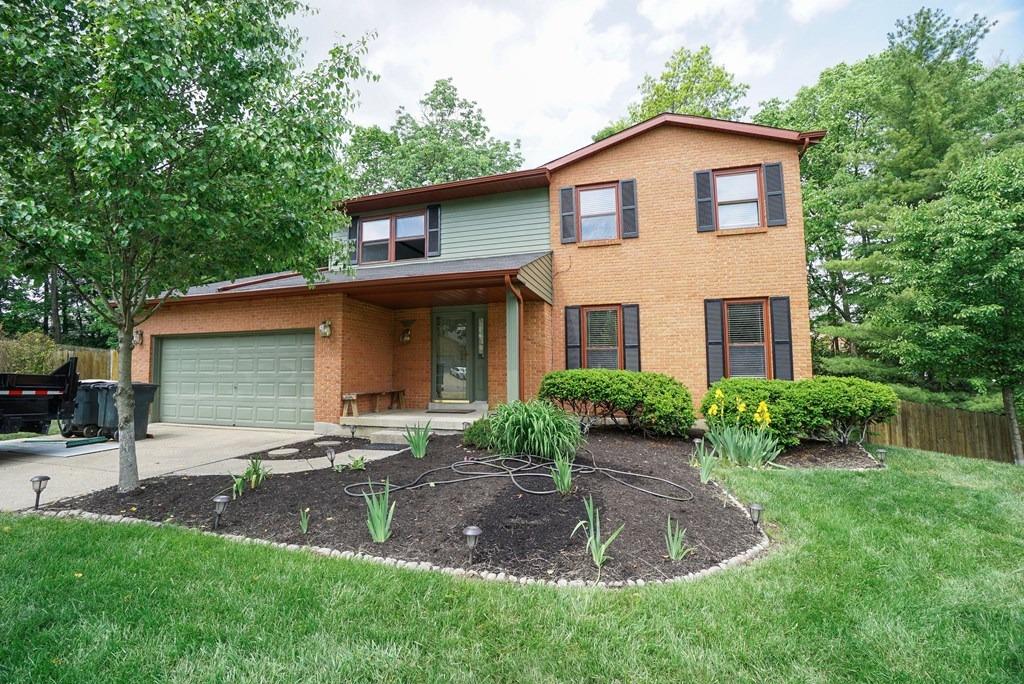 Cincinnati Home Buying Guide
Should you include an inspection contingency or waive it when buying a home in Cincinnati? Here's what you need to know.
Buying a home in Cincinnati, Ohio, is an exciting journey — but it comes with critical decisions that can impact your peace of mind and financial well-being for years to come. One of the most consequential is whether to include an inspection contingency in your offer, or waive it to make your bid more competitive.
When you include an inspection contingency in your offer, you're essentially saying: "I want to buy this house, but I need to ensure there are no major issues first." This clause allows you to conduct a professional inspection and potentially renegotiate — or even withdraw your offer — based on the findings.
In Cincinnati, where older homes are common, having an inspection can be particularly beneficial. This aligns with the mindset of many cautious buyers who prefer to know exactly what they're getting into.
In a competitive market, waiving the inspection contingency might make your offer more appealing to sellers — especially when multiple bids are on the table. Here's why some buyers choose this route.
However, waiving an inspection is not without risks. You might miss identifying significant issues that could affect your finances and living conditions for years to come.
Making the right choice depends on several factors, including the property's age, your risk tolerance, and current market dynamics in Cincinnati. Here's how to approach the decision:
Look at recent home sales in your desired Cincinnati neighborhood to understand how often inspections are waived. Gauge how sellers have responded to offers with and without contingencies — it can reveal a lot about local norms and expectations.
It doesn't have to be all or nothing. Many Cincinnati buyers and their agents are finding creative ways to stay competitive without completely giving up their protection — by scoping the inspection or capping what they can ask for in repairs.
A full inspection contingency can feel like a dealbreaker to sellers in a hot market. But walking in completely blind is a gamble most buyers aren't comfortable with either. The good news: there's a well-established middle path.
Instead of a full home inspection covering every minor detail, you can restrict the contingency to only the most serious — and most expensive — categories of risk. This signals confidence to the seller while still protecting you from the issues that could truly derail your finances.
Mold remediation can run from a few hundred to tens of thousands of dollars, and it poses real health risks. A targeted mold inspection is fast and focused.
Foundation cracks, settling, or framing issues are among the most expensive repairs a homeowner can face — and some aren't visible to the untrained eye.
A sewer scope can reveal collapsed pipes, root intrusion, or septic failure. Repairs easily run $5,000–$20,000+, making this one of the most valuable targeted inspections.
Termite damage can be hidden inside walls for years. A Wood Destroying Insect (WDI) report is quick, inexpensive, and can reveal serious structural threats.
By limiting your contingency to these four categories, you're telling the seller: "I'm not going to nickel-and-dime you over a dripping faucet or a loose doorknob — but I do need to know the house isn't going to fall down or flood a basement full of sewage." Most sellers find this entirely reasonable.
Another popular approach is to keep a full inspection but place a dollar cap on what you can request in repairs or credits. This gives the seller cost certainty — they know their downside risk — while still giving you an escape hatch if something truly catastrophic is discovered.
You agree in writing that you will only request repairs (or a price reduction) if the total cost of defects exceeds a set threshold — and that your total requests won't exceed a defined dollar amount.
This approach is flexible. A lower cap (e.g., $3,000–$5,000) is more attractive to sellers in a highly competitive market. A higher cap (e.g., $10,000–$15,000) offers buyers more meaningful protection on older homes.
Pro tip: Combining both strategies can be especially powerful — limit the scope to major risk categories and cap the dollar amount you can request. This gives sellers a clean, confident offer while ensuring you're not on the hook for a catastrophic hidden defect.
While waiving inspections can make offers more competitive, it's not universally common. The decision often depends on the property's condition and the overall market climate at the time of your offer.
Typically, no. Waiving the inspection means you accept the property as-is, so you forfeit the leverage to negotiate repairs based on inspection findings.
You'll be responsible for any repairs or maintenance — which is exactly why it's so important to carefully evaluate your risk tolerance and financial readiness before waiving an inspection.
Deciding between an inspection contingency and waiving it is a pivotal step in your Cincinnati home-buying journey. Weigh the benefits of protection and peace of mind against the competitive edge that comes with a cleaner offer. By understanding your priorities and consulting with professionals who know the Cincinnati market, you can make a choice that truly supports your homeownership goals.

Rhonda Everitt — Top 5% Realtor | Comey & Shepherd Realtors | Cincinnati & DaytonRhonda Everitt is a top 5% real estate agent with Comey & Shepherd Realtors, proudly serving buyers a....
The Data Center Fight Happening in Your Backyard: What Cincinnati & Dayton Buyers Need to KnowData centers have become one of the fastest-moving stories in Ohio real estate. If you're buying,
Priced Out of Mason? Why Home Buyers Should Look at Lebanon, OhioIf you're looking for a home north of Cincinnati, there's a pretty good chance Mason, Ohio is somewhere on your list.And I get it
Three of My Buyers Are 30 and Under. Here’s How They Bought Homes in Cincinnati.If you’re in your 20s or early 30s, you’ve probably heard some version of this: Young people can
Mason vs. Sycamore Schools: What Cincinnati Families Should Know Before They DecideBy Rhonda Everitt, REALTOR® | Comey & Shepherd RealtorsIf you're weighing a move to Warren County or
 © 2026 Dayton Area Board of Realtors. All rights reserved. Information deemed to be reliable but not guaranteed. The data relating to real estate for sale on this website comes from Dayton Area Board of Realtors and the Broker Reciprocity Program.sm. Real estate listings held by brokerage firms other than Comey & Shepherd, REALTORS are marked with the BR logo and detailed information about them includes the name of the listing brokers. Listing broker has attempted to offer accurate data, but
buyers are advised to confirm all items. Information last updated on September 21, 2026 3:07 AM UTC
Show More...
© 2026 Dayton Area Board of Realtors. All rights reserved. Information deemed to be reliable but not guaranteed. The data relating to real estate for sale on this website comes from Dayton Area Board of Realtors and the Broker Reciprocity Program.sm. Real estate listings held by brokerage firms other than Comey & Shepherd, REALTORS are marked with the BR logo and detailed information about them includes the name of the listing brokers. Listing broker has attempted to offer accurate data, but
buyers are advised to confirm all items. Information last updated on September 21, 2026 3:07 AM UTC
Show More...
 The data relating to real estate for sale on this web site comes
in part from the Broker Reciprocity™ program of the Multiple
Listing Service of Greater Cincinnati. Real estate listings held by
brokerage firms other than Comey & Shepherd, REALTORS are marked with the MLS ™ logo
(the small logo to the left) and detailed information about them includes
the name of the listing brokers. The information herein is furnished by the property owner in
good faith
but is subject to verification by the purchaser. Neither the MLS, the Broker,
the Agent nor MFM guarantee or warranty the correctness therein.
All information is dated and is subject to change at any time.
This data is up-to-date as of September 21, 2026 3:00 AM UTC.
Copyright 2026, MLS of Greater Cincinnati, Inc. All rights reserved.
Show More...
The data relating to real estate for sale on this web site comes
in part from the Broker Reciprocity™ program of the Multiple
Listing Service of Greater Cincinnati. Real estate listings held by
brokerage firms other than Comey & Shepherd, REALTORS are marked with the MLS ™ logo
(the small logo to the left) and detailed information about them includes
the name of the listing brokers. The information herein is furnished by the property owner in
good faith
but is subject to verification by the purchaser. Neither the MLS, the Broker,
the Agent nor MFM guarantee or warranty the correctness therein.
All information is dated and is subject to change at any time.
This data is up-to-date as of September 21, 2026 3:00 AM UTC.
Copyright 2026, MLS of Greater Cincinnati, Inc. All rights reserved.
Show More...
